EU4 Trade Nodes Explained: Interactive Map, End Nodes & Best Nodes (2026 Guide)
Updated October 2026: added end-node rankings, centers of trade, best collection nodes, and an FAQ. Mechanics verified against the EU4 wiki.
I’ve played EU4 for years, and trade has always confused me. For a long time I wasn’t able to take full advantage of it simply because I never had a clear understanding of how it worked. I built this tool to give you a quick visual guide, the kind of thing I wish I’d had, to help you see how trade actually flows in a much easier and more intuitive way.
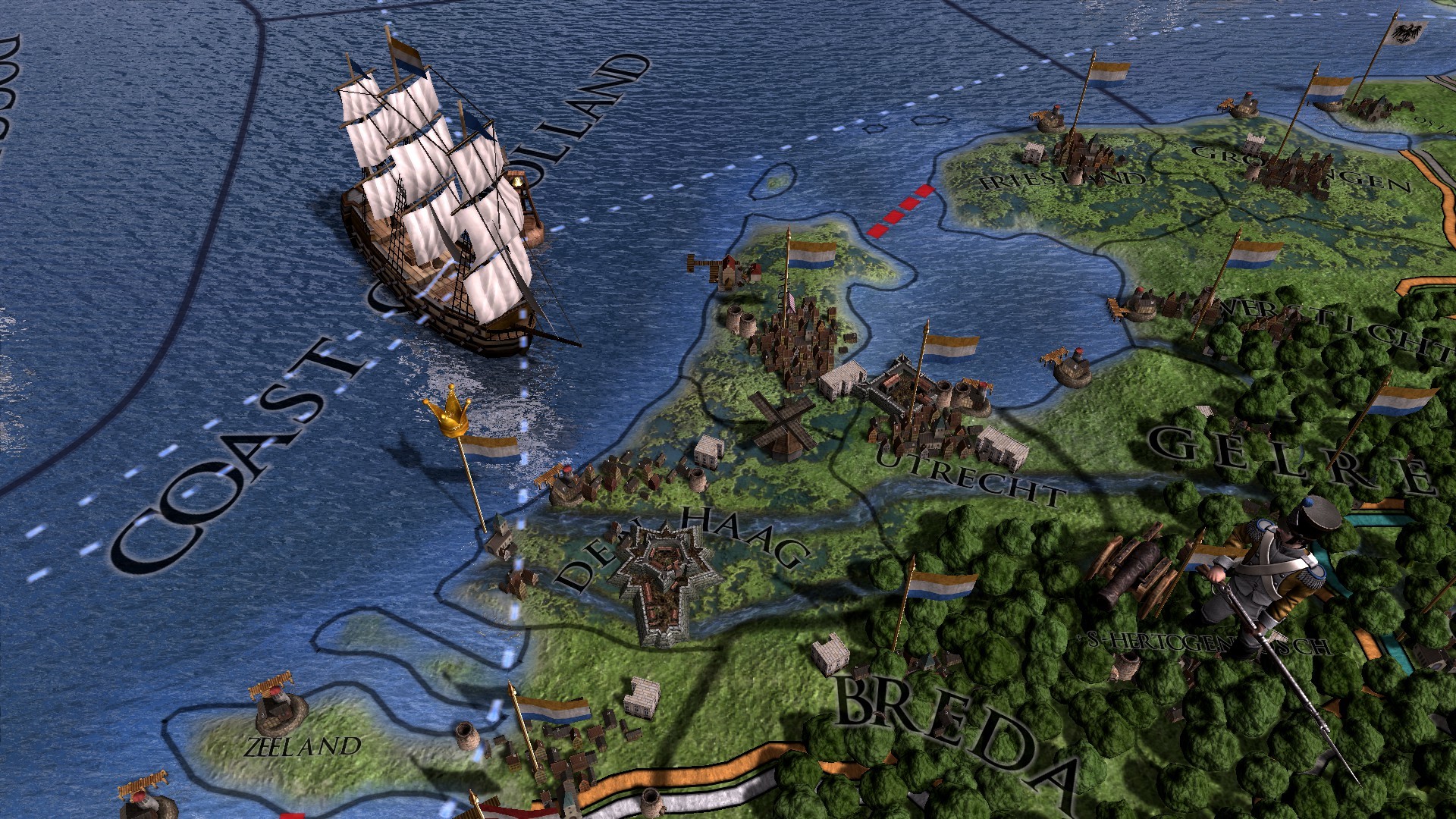
Source: Paradox Interactive / Europa Universalis IV official screenshots
What Are Trade Nodes?
Every province in EU4 feeds its trade value into a trade node, and each land province belongs to exactly one node. Trade nodes are the hubs of the global economy. They collect value from the provinces around them, and that value either gets collected by a nation with trade power in the node, or it flows onward to the next node.
Think of it like a river system. Provinces are the streams that feed into the river (the trade node). The river flows downstream, and at each junction, the water splits based on how much control each branch has. Some of the water gets diverted (collected by nations), and the rest keeps flowing toward the sea.
The Three End Nodes
The trade network has three end nodes, the “seas” where trade value finally settles. Once value reaches an end node, it stays there. It doesn’t flow anywhere else. This is why controlling an end node is so powerful: you’re at the end of the line, and everyone’s trade has to pass through you.
| End node | Fed by | Worth knowing |
|---|---|---|
| English Channel | The New World (via the Caribbean, Chesapeake and Bordeaux chains), Africa, and Northern Europe | The richest end node in the game. Community consensus ranks it the best end node to control. |
| Genoa | The Middle East, North Africa, and the Atlantic (Sevilla chain) | The Mediterranean end node. Strong second, especially for Iberian, Italian, and North African powers. |
| Venice | The Levant, the Balkans, and the Constantinople and Alexandria chains | The eastern Mediterranean end node. Ranked weakest of the three because much of its trade also feeds the other two. |
New players ask which end node is best: the settled community answer is English Channel, then Genoa, then Venice.
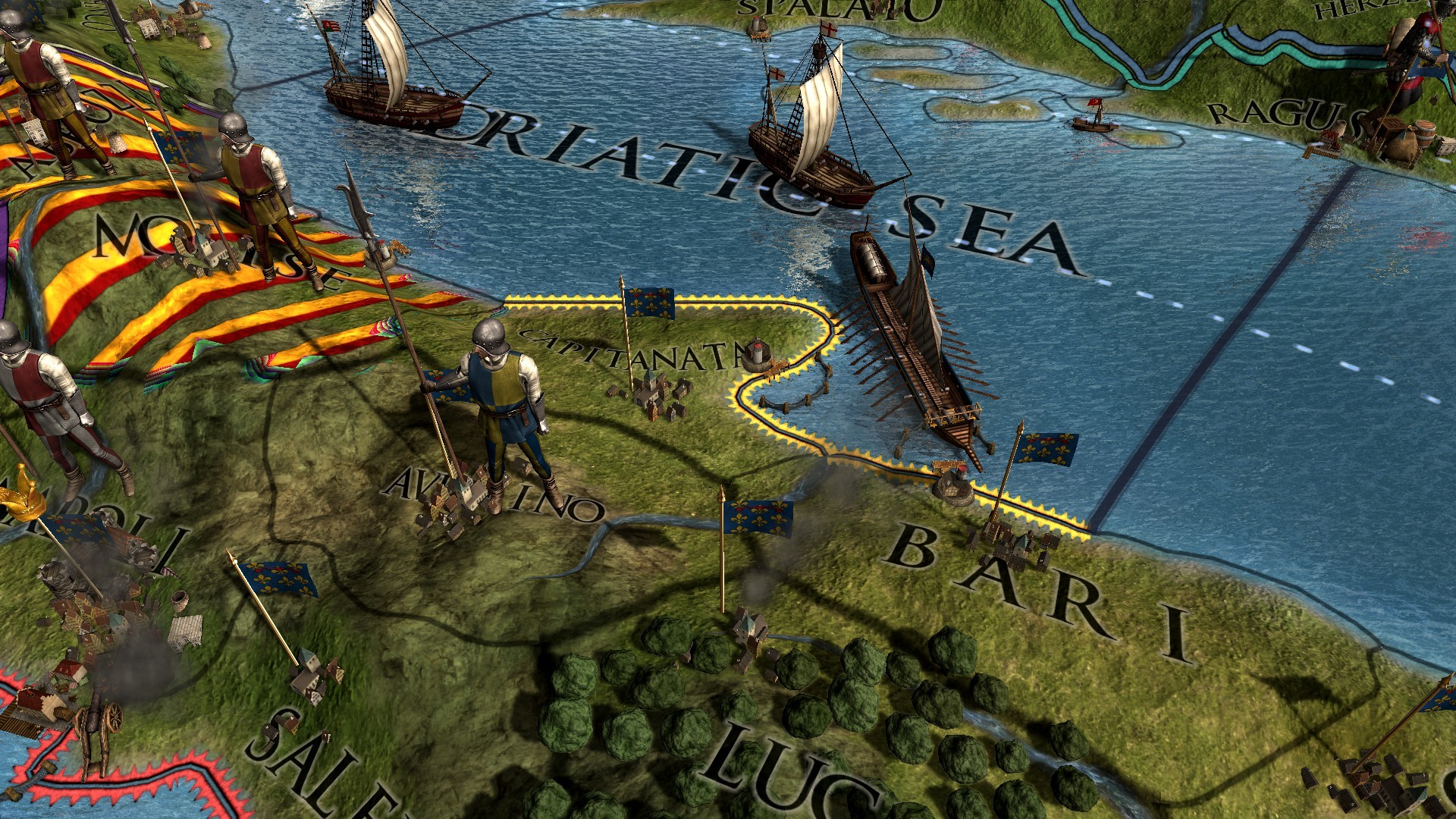
Source: Paradox Interactive / Europa Universalis IV official screenshots
How Value Flows
Here’s the key mechanic that confuses most new players: trade value doesn’t pick one path. It splits across every available route.
If a node has three outgoing connections, the value flowing out of that node splits across all three. Nations with merchants in the node steer that value toward their preferred outgoing route, and each steering merchant adds a stacking boost (first merchant +5%, second +2.5%, third +1.6%, fourth +1.2%, fifth +1.0%; the bonus caps at five merchants). They can push the flow, but they can’t stop the split entirely.
This means:
- Trade power matters everywhere, not just in your home node
- Controlling the path is often as important as controlling the source
- Trade power is relative: what counts is your share of the node, not the raw number
If you want the full mechanic breakdown, how merchants, trade power, and steering actually work is covered in our companion guide.
Centers of Trade: the Trade Power Multipliers
Some provinces carry a center of trade, and these are the single most valuable trade targets early in the game. A level 1 center of trade adds +5 local trade power, level 2 adds +10, and level 3 adds +25, which makes them the fastest way to grab a big share of a node without conquering half of it.
A few rules worth knowing (verified on the wiki):
- With the Dharma DLC you can upgrade centers manually: 200 ducats to go from level 1 to level 2, 1000 ducats from level 2 to level 3.
- A center of trade takes up two building slots, so a province with one can only build 10 buildings instead of 12.
- When a province changes hands, its center of trade drops one level, and you can’t upgrade centers while at war.
Prioritize conquering or upgrading centers of trade in your home node before anything else. They are cheap power compared to conquering whole countries.
The Best Trade Nodes to Collect In
If you’re picking where to base your economy, this is the shortlist:
- English Channel - the richest end node; the nations that dominate it are the richest in the game.
- Genoa - the best Mediterranean end node; a natural home for Spain, Italy, or a North African power.
- Sevilla - the great mid-chain funnel: New World and African trade passes through here on its way to the Channel and Genoa.
- Constantinople - the crossroads of Europe and Asia; rich locally and a powerful steering position.
- Malacca - the gateway of the Asian trade chain; whoever holds it steers the wealth of the East.
The pattern is simple: collect at an end node, or collect at a node that sits on a major trade artery and steer the flow toward you.
Why This Matters for Your Campaign
Understanding the trade network changes how you play:
1. Your home node is your foundation. The node where your capital sits is where you collect trade. The more trade power you have there, the more of the value you capture.
2. Expand toward the end nodes. The closer you are to an end node, the more value flows through your territory. A nation in the English Channel collects far more than a nation in the middle of the network.
3. Trade power compounds. The more provinces you control in a node, the more trade power you have, which means you capture more value, which means you can afford more provinces. It’s a snowball effect.
4. Don’t ignore upstream. Even if your home node is downstream, controlling key upstream nodes lets you steer more value toward yourself.
Explore It Visually
Understanding trade flow from text is hard. It’s a network, and networks are best understood visually. That’s why we built a free interactive tool:
→ Explore the interactive EU4 trade node map
Click any node to see:
- What feeds into it
- Where its value flows
- Which end node it eventually reaches
- How the value splits across routes
The map has four views: Simple (12 key nodes), Europe (29 nodes), Asia (31 nodes), and Global (78 nodes), plus a search function to jump to any node by name.
Trade in EU4 is a network, not a line. Value flows from provinces into nodes, splits across every available route, and eventually settles in one of three end nodes. The nations that understand this network, and position themselves to capture the flow, are the ones that build the richest empires.
If you’ve ever wondered why your trade income is lower than it should be, or why the English Channel is so valuable, the interactive map will show you exactly how it all connects.
Frequently Asked Questions
What are the three end nodes in EU4? English Channel, Genoa, and Venice. Trade flows into them but never out, so value accumulates there and whoever collects in them profits.
Do I need a merchant to collect trade in my home node? No. You collect automatically in the node where your capital sits. A merchant placed there adds +2 trade power and a small income bonus, so it still helps.
How do I move my home trade node? By moving your trade capital to a province in another node (through the trade interface). The new node becomes your home node.
Can trade flow backward? No. Each link has a fixed downstream direction, and merchants can only steer value along existing outgoing links. You can’t reverse a route.
How do I increase a trade node’s value? Trade value comes from goods produced, so build manufactories, stack goods-produced modifiers, and raise production development in the node’s provinces. Then steer value in from wealthy upstream nodes.
Which end node is best? The English Channel is the richest end node and the community’s consensus best, followed by Genoa, with Venice last.
Related: EU4 trade power, merchants, and steering explained · EU4 trade companies explained · Best EU4 DLC