CK3 Silk and Silver Republics Guide: How to Play a Republic, Win the Assembly and Rule Trade
Source: Paradox Interactive / official Silk and Silver artwork (Dev Diary #10)
Live guide, updated November 18, 2026. Silk and Silver launched November 17, 2026 ($29.99, included in Chapter V), with the free Update 1.21 Florin the same day. The mechanics below are verified against the live 1.21 game files and the official dev diaries (Dev Diaries #4 through #8). Where a detail is still unconfirmed, the guide says so at the end instead of guessing.
Silk and Silver adds a way to play Crusader Kings 3 that has never existed in the game before: as a patrician family inside a republic. Not a king, not a duke, not a landless adventurer. A family that rules a city by money, votes and reputation, in a world where Venice, Genoa and Florence are the powers that matter. If you have ever wanted to win a CK3 campaign without painting the map, this is the playstyle built for you.
Republics are the landed half of the expansion’s two new government types. Merchants are the landless half, families that live on trade routes and loans. Republics own land, but they play nothing like a feudal realm. They build tall instead of wide, they grow by developing their capital instead of seizing territory, and their big decisions are made by vote in an assembly, not by royal decree. This guide covers republics only. Merchants get a brief mention where the two systems touch, and their own dedicated guide covers them in depth.
What a republic is
A republic in Silk and Silver is a small, tightly packed city-state inspired by historical Venice, Florence and the free cities of the Holy Roman Empire. Paradox frames it as the playstyle for people who do not want to go wide and build a massive realm, and who would rather focus on internal politicking, scheming, changing laws and trade.
Every republic has a ruler plus patricians, the noble families who trade in some fashion to fund their political ambitions. Your family is one of those patrician houses. Wealth buys power, and popularity decides who keeps the top job. The historical thread underneath is deliberate: many famous republics began as communal city-states before growing semi-tyrannical under the grip of a single family, and the developers built the patrician dynasties around exactly that arc. Families squabble, plot together, and push their own ambitions through the system.
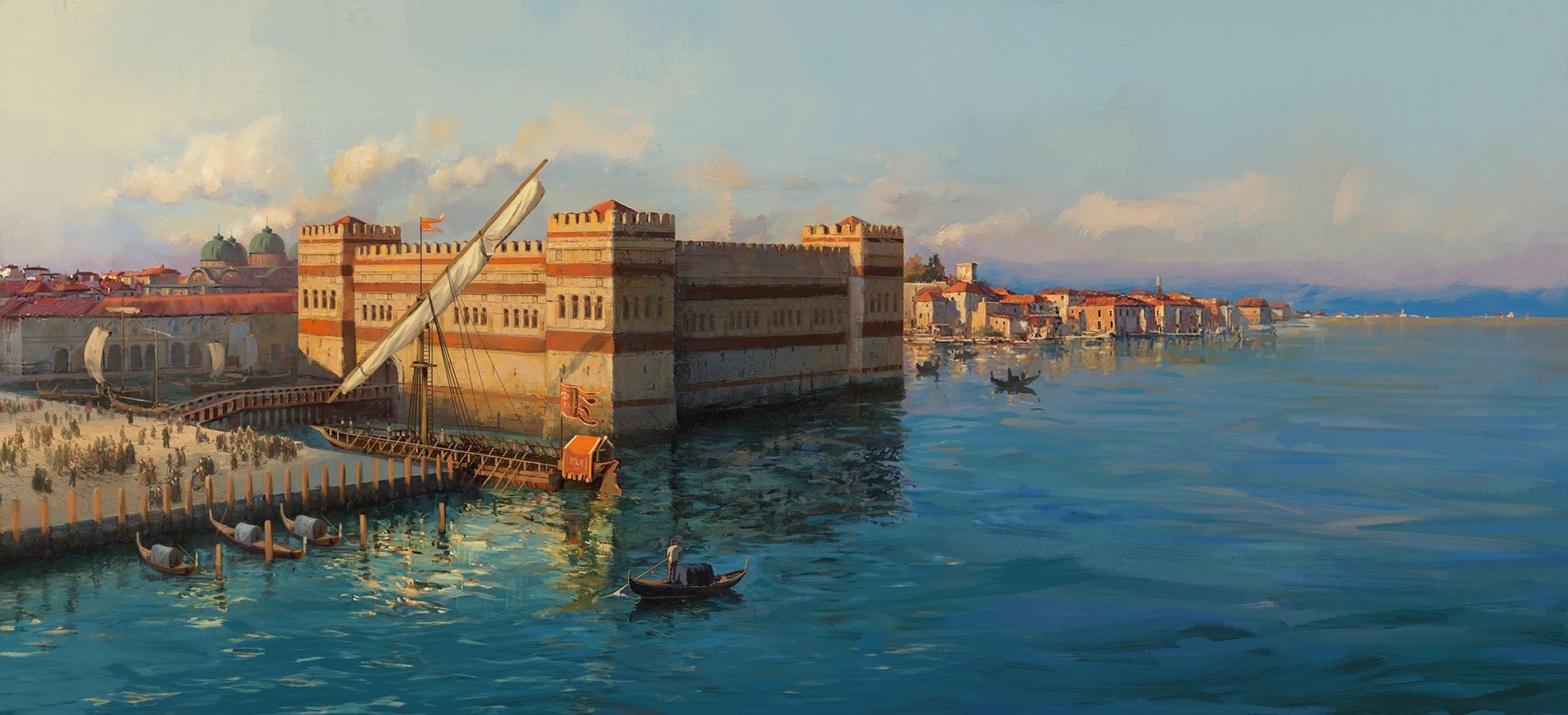
Republics also get their own look. Mayors wear a formal robe in the early era and a houppelande with a livery collar later on, and at the top of the ladder sits the Venetian doge in full ceremonial dress, furred variant and corno ducale included. Dev Diary #10 also adds two new dynasty legacy tracks, one for republic focused dynasties and one for merchant focused dynasties, with the republic track illustrated by a view of Venice.

Source: Paradox Interactive / official Silk and Silver artwork (Dev Diary #10)
How to become a republic
There are two realistic ways in, and both start in Italy.
Start as one. The expansion adds two new bookmarks built around the new systems. 1066, Channels of Commerce, follows renowned merchants building trade networks. 1178, Guelphs & Ghibellines, drops you into the papal-imperial conflict in northern Italy, which Dev Diary #5 calls an especially interesting time and place for republic gameplay. Pick a patrician house in Venice or another Italian city-state and you are playing a republic from day one.
Break free and become one. In 1167, an Italian city-state can break free, become a republic and join the Lombard League. That route suits a player who wants to earn the government type instead of starting with it, and it ties directly into the Guelphs & Ghibellines situation running through the 1178 bookmark.
Once you are a republic, your administration type shapes what you are good at. All republics share the same government type and the same feature set, but each has a designated administration that sets its primary focus. Venice starts as a Maritime Republic, which can trade much further away than the other types. County-tier republics are limited to Communal Administration, a more basic type with fewer benefits. You can change your administration, but the diaries warn it is rather costly, so pick with intent rather than planning to swap later. Paradox describes a third focus too, an expansionist house of nobles, alongside the seafaring trade power and the city-state ruled by the common folk. The in-game name of that third administration is not confirmed in the sources we checked, so this guide does not name it. See the unconfirmed list at the end.
A republic’s real power unlocks with rank. The diaries are explicit that a republic must grow to reach its potential, and the true extent of its power only becomes apparent once it reaches Duchy tier. Below that, you are a small city with big ambitions and limited tools. County-tier republics are also restricted in other ways, with a very constrained domain limit and only the ruler’s family as patricians.
Patricians, the assembly and staying in power
This is the heart of the playstyle, and it works nothing like feudal politics.
Republics feature a unique assembly voting mechanic. Big decisions are made in the assembly rather than by royal decree, and you navigate internal politics and buy influence to stay in power. Noble families within a republic have their own ambitions and can influence laws through parliament, pursuing their own political influence. The Republic tab was reorganized during development to group everything at a glance, with everything related to the Assembly moved to its own focused tab.
Republics do not use crown authority. Instead, the Assembly passes laws one at a time, covering revoking titles, terms of office, who may vote and majorities, and decrees that spend the state treasury. Laws can even change the ruler’s title: a Doge can become a Prince. Succession is usually by election, with a despotic law option for rulers who would rather not face a vote. The exact length of a term of office is set by the assembly laws, and no fixed election interval is published in the sources we checked.
Assembly business has real prices in the live game. Republican decrees cost prestige, state treasury gold, or both, and each has a cooldown:
- Request War Approval: treasury gold, 5 year cooldown. Without it, you cannot declare war.
- Finance War Effort: 350 prestige, 5 year cooldown.
- Tax Relief: 350 prestige, 10 year cooldown.
- Debt Forgiveness: treasury gold, 15 year cooldown.
- Request Banishment Approval: 350 prestige, 5 year cooldown.
- Request Proscription Approval: 700 prestige, 10 year cooldown.
- Request Execution Approval: 350 prestige, 5 year cooldown.
- Set League Focus: 500 prestige, 1 year cooldown.
Three things decide whether you keep power:
Popularity. The court of public opinion weighs more heavily in a republic than under a monarchy. In the live game, Popular Opinion is a bar from minus 100 to plus 100. When it runs low in your capital, a Capital Uprising faction forms, and its demands get worse the lower opinion falls. Civic Works is a repeatable great project that lets you spend gold on the capital to push opinion back up. Dev Diary #5 adds a practical warning: as a republic it is an especially good idea to keep an eye on popular opinion and control in your capital, otherwise bad things can happen.
Influence. You buy influence to win votes and push laws. Treat gold as votes, because in practice that is what it is. Keep a reserve for the votes that matter instead of spending everything on buildings.
Family rivalry. The other patrician families are not background decoration. They trade, scheme and push their own agendas, and a rival house with more money and more friends is a direct threat to your position. A patrician’s rating decides how strong their House Ambition is, and there are five ambitions: Commerce, Aggrandizement, Communal, Signorial and Agitation. If a rival gets too strong, the Overthrow Government decision starts a hostile scheme to seize the republic, at a cost of 350 prestige and a 15 year cooldown, and it is a serious crime if exposed.
Growing tall: your capital levels up instead of your borders
Republics do not expand and create new titles like other governments. They are meant to build tall rather than wide, and build tall well. Instead of seizing territory, a republic develops its capital and gradually raises its level, expanding inward rather than outward.
That changes what a good campaign looks like. A feudal ruler measures progress in counties. A republic measures it in the size and prosperity of one city. As the capital grows in size, a dedicated tier law in the Republic tab raises the republic’s tier and grants new bonuses, including higher domain and vassal limits and a longer reach for trade. The new achievement Medieval Skylines captures the idea exactly: hold three holdings in your personal domain with a Settlement Size of 10. Your capital is your kingdom, and every gold piece that goes into it pays off in trade income, political weight and resilience.
Merchants can travel to and from a republic and retain their accumulated improvements when they do, which makes the two government types natural partners. A merchant family operating out of your city makes your markets richer, and your republic gives them a safe home base. If you play the long game, cultivate merchant partners instead of treating them as rivals.
Trade posts: your flag in foreign counties
Trade Posts are a new kind of district that a republic can establish in someone else’s territory. Every county in the world can have one, though only one trade post fits in a county, and each patrician is limited in how many they can hold. The base value is 2 trade posts per patrician, from Dev Diary #8, and modifiers can raise it.
A trade post is a forward base for commerce. It can negotiate culturally exclusive mercenaries, or improve goods prices through specific buildings, pulling foreign territory into your commercial web whether its ruler welcomes it or not. You can persuade a county’s holder to hand a trade post over, steal one with a scheme, or take a neighbouring or coastal county with the Conquer Trade County casus belli. Trade posts also act as starting points for your trade routes, which gives patricians a much longer trading reach.
Trade post buildings confirmed in the live game include the Recruitment Office, the Shipyard and the Cellar, plus two buildings that come with the league system: the Arsenal, which is military, and the League Treasury, which is economy. Both have 3 levels. Level 1 costs 50 gold and takes 90 days. The Arsenal gives plus 1 Number of Knights, plus 15 percent Knight Effectiveness and plus 1 Trade Competitiveness per Knight. The League Treasury gives plus 0.3 per month Urban Income, plus 1 percent Monthly Income from Trade and plus 0.03 per month prosperity growth in your capital county. The Hanseatic League has a trade post building of its own, the Kontor, also 3 levels at 50 gold and 90 days for level 1, giving plus 5 Trade Competitiveness, plus 3 percent Trade Capacity and plus 15 percent Prosperity Growth.
Practical advice for your first campaign: place trade posts where the goods are, not where the map looks empty. A post in a county that produces what your home market needs is worth more than three posts in counties nobody trades through. And remember the mercenary angle. Republics start with a slightly higher mercenary limit than other government types, to compensate for their generally lower inherent military strength, and the developers added a hard cap on mercenary use specifically to stop players buying military victory outright. Money still helps you win wars in Silk and Silver, but it no longer wins them by itself.
Trade leagues: the Hanseatic hook
Trade leagues are the collective version of republic ambition, explicitly inspired by the historical Hanseatic League. Multiple republics pool their resources and dominate markets together, and the developers position a successful league at the top of the game’s hierarchy, with members able to overpower less well-connected rivals through sheer combined influence.
How leagues work, as confirmed in the dev diaries:
- 5 Cohesion levels. Casual Barter (0 to 20, no effects), Shared Markets (20 to 45), Joint Ventures (45 to 70), Commercial Consortium (70 to 95) and Mercantile Union (95 to 100). The league grows more powerful as its members cooperate, and higher cohesion unlocks more.
- A league leader who sets the focus. The leader can set a focused trade-good category for the whole league, so the league trades as one bloc instead of a dozen competing houses. The focus improves sell price, production and expertise gain for that category.
- A founding decision. The achievement League of Ledgers is awarded for taking the Found the Hanseatic League decision, so founding a league is a formal, deliberate act, not something that happens by accident.
- Shared military and economic muscle. League members back each other, which matters because a single small republic is an easy target and a league is not.
Leagues are the late game for a republic campaign. A solo republic can get rich. A league can dictate prices across a region.
The three new casus belli
Trade disputes in Silk and Silver are settled with dedicated war goals, not generic conquest. Three new casus belli are confirmed:
- Trade War. A rival league gives up its trade posts and monopolies in shared markets. This is the economic war: you are not taking land, you are taking their commerce.
- Proclaim Commune. Free land from a non-republic ruler and turn it into an independent republic that joins the league. This is how a league grows its membership by force, and it is the closest thing republics have to expansion.
- Enforce a Monopoly. Available to a league at 70 Cohesion, this lets the league take a monopoly in a market. It is the payoff for keeping a league together and pushing its cohesion to the top. Dev Diary #8 states the 70 Cohesion requirement directly, and 70 is also where the Commercial Consortium cohesion level begins.
Use Trade War when a rival league is eating your profits. Use Proclaim Commune when a rich city is trapped under a feudal ruler and would be worth more as a sister republic. Save Enforce a Monopoly for the markets that define your income, because a 70 Cohesion league is an investment, not a starting position.
Best starts for 1066 and 1178
Venice, either bookmark. The flagship republic, a Maritime Republic from the start, with the longest trade reach and the Doge’s Palace as its seat. The Venetian League achievement asks you to expand Venice to its historical borders, which gives a first campaign a clear goal. Venice is also an entrepot, one of the unique districts in famous trade centers such as Cairo, Baghdad, Constantinople and Venice, where goods are resold onward along the Silk Road.
Genoa and the other Italian city-states. The same republic toolkit with a different starting position, and in 1178 you are inside the Guelphs & Ghibellines situation from the first day. The situation has six phases: Papal Resurgence, Dictatus Papae, Repose, Agitation, Guelph Advantage and Ghibelline Advantage. A side enters Advantage at 70 percent of the power bar, checked monthly, and drops back below 60 percent. Only a side in Advantage can end the situation in its favour, with three endings: Guelph Victory, Ghibelline Victory or Compromise. Historical events punctuate it: the Investiture Controversy in 1075 and the Concordat of Worms in 1123. In 1167 an Italian city-state can break free, become a republic and join the Lombard League.
A small commune aiming for kingdom tier. The Burgher King achievement asks you to reach Kingdom tier as the Central Germanic head of a republic, which is a good long-term goal for a campaign that starts small.
The Roman Republic run. The achievement Senatus Populusque Romanus is awarded for taking the Restore the Roman Republic decision. The decision is confirmed in the live game files as a major Silk and Silver decision with no gold or prestige cost. The game’s own decision text lists no requirements for it, and its stated effect is that you may choose to make Roma the realm capital. Do not confuse it with Restore the Roman Empire, a separate decision with its own territory requirements.
Italian flavor fills out the experience either way: civic carnivals for republics, a dedicated carnival activity shown in Dev Diary #5, and new event backgrounds for markets, workshops and estates across Europe, the Middle East and Asia.
Merchants: your partners, not your rivals
Merchants are the landless partner government, and the two systems are designed to interlock. Merchants run trade routes (one Profit Route per merchant at base, plus Commission Routes hired by rulers), build monopolies and trade expertise, take contracts, keep a domicile, serve a patron, and lend gold at interest. A merchant who loans gold to a ruler gains a Strong Hook over that ruler for as long as the debt stands, which makes merchants dangerous friends and useful allies. There are 44 trade goods in the live game and 922 markets, one per de jure duchy.
For a republic player, the practical takeaway is simple: merchants bring goods to your markets, and your markets give them somewhere to sell. The full merchant systems are covered in the Merchant guide, including Trade Routes, Commission Routes, Monopolies, Trade Expertise, Contracts, Domicile, Patron relationships, loans and usury.
What is still unconfirmed
This guide was built from the dev diaries and verified against the live 1.21 game files on launch day. A few details are still not pinned down in any source we checked, and they are listed here rather than guessed:
- The in-game name of the third republic administration, the expansionist noble-house focus. Maritime and Communal are confirmed by name.
- The exact election interval for a republic ruler. Terms of office are set by assembly law, and no fixed interval is published.
- Whether low control in the capital triggers anything specific for republics. Low Popular Opinion is confirmed to raise a Capital Uprising faction, but no control threshold was found.
- The exact level 2 and level 3 effects of the Arsenal, League Treasury and Kontor. Level 1 values are verified above, and each building has 3 levels with more effects higher up.
- The exact unlock conditions for Restore the Roman Republic. The game’s decision text lists none, so the guide does not claim any.
Silk and Silver is live now. If you want the republic playstyle, start in Venice in 1066, keep your capital growing, keep your popularity up, and remember the rule the whole expansion is built on: in a republic, money is power, and power is a vote you have to win again and again.