How to Play a Republic and Become Doge in CK3 Silk and Silver
Source: Paradox Interactive / official game screenshots
You are not a king. You are a family, one of several rich houses in a small city that answers to no crown. The Doge’s chair is the prize, and it is rented, not owned. This guide walks you through winning it in CK3 Silk and Silver, keeping it, and getting it back when you lose it.
The facts are stamped to patch 1.21, “Florin”, plus the hotfix of 18 November 2026. Silk and Silver launched 17 November 2026 for $29.99, with the free 1.21 update the same day. Our worth-it verdict covers whether it is worth the price. For the full mechanics reference, read our republics guide alongside this election walkthrough.
One honest note first. We have not played a republic campaign ourselves yet. This guide is built from the live 1.21 game files, the Paradox dev diaries, and launch-day coverage. Where the game does not publish a number, we say so instead of guessing.
What a republic is, in one minute
Silk and Silver adds two new government types: the landless Merchant and the landed Republic, playable in CK3 for the first time. A republic has a ruler plus patricians, noble families who trade to fund their political ambitions, while rival houses trade, scheme, and push their own agendas.
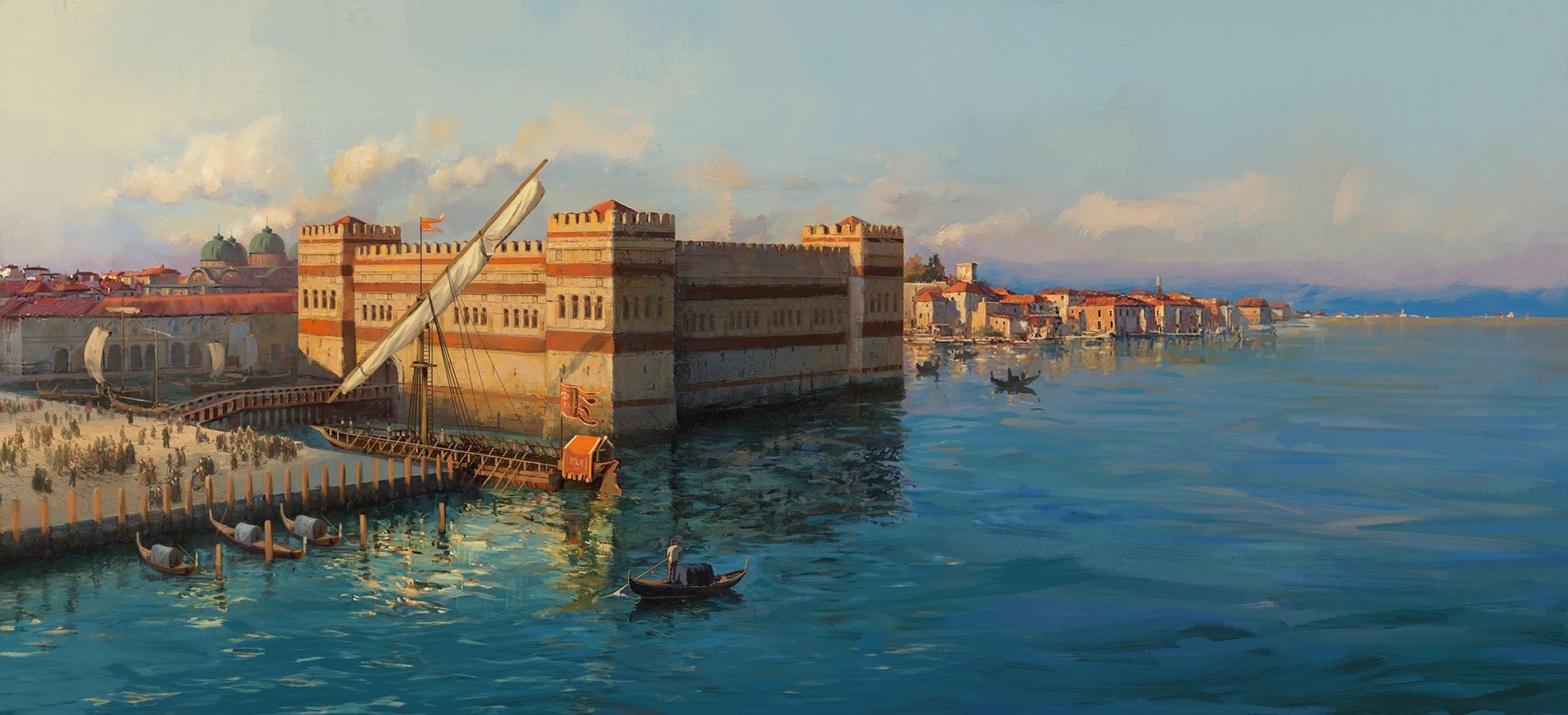
Three things set a republic apart. There is no crown authority: big decisions go to the Assembly, where any member can propose a law change and voting runs over the next six months. Succession is usually by election, so wealth buys power and popularity decides who keeps the top job. And your domain is a small city-state: you grow by developing your capital, not by conquering neighbours. Venice is an entrepot, a unique district in a famous trade centre, and as your capital grows a tier law raises your domain and vassal limits and your trade reach.
Pick your start: Venice vs Genoa, 1066 vs 1178
There are two new bookmarks. 1066, Channels of Commerce, is where the renowned merchant houses begin. 1178, Guelphs and Ghibellines, drops you into northern Italy during the struggle between the Pope and the Holy Roman Empire, with a situation that tips one side into advantage at 70 percent of the power bar.
| Start | Government | Why pick it |
|---|---|---|
| Venice, 1066 | Maritime Republic | The classic run. Venice starts with the Maritime administration, which trades furthest. Best first campaign. |
| Genoa, 1066 | Republic | The rival port. Same systems, a different coast and different neighbours. Good second run. |
| Venice or Genoa, 1178 | Maritime Republic | The republic showcase. The Guelphs and Ghibellines situation is live from day one, and in 1167 an Italian city-state can break free, become a republic, and join the Lombard League. |
| Any county republic | Communal | County-tier republics are limited to the Communal administration and to one patrician family. A republic really opens up at duchy tier, so start there for your first run. |
Venice is the pick for a first campaign: furthest trade reach, the entrepot district, and the most room to grow. Genoa is the better second run, once you know the election loop and want a harder start. For starting rulers in general, our best starting character guide covers the wider 1.21 roster.
One history note, labelled as history and not the game: real Genoa had no Doge in 1066 or 1178. It was ruled by annually elected consuls, and the dogate was only created in 1339. Whether CK3 1.21 still calls Genoa’s ruler “Doge” is not verified, and the in-game starting rulers are unverified too, so do not plan a run around their names.
Your first 20 years as a patrician
Your first job is building a house that can win one. Four moves.
Grow your capital. Republics build tall. Spend on your capital’s districts and development, because a bigger capital raises your domain and vassal limits and your trade reach. A republic that neglects its capital is a rich family in a poor city, and poor cities do not elect Doges.
Get trade posts. A trade post is a district in someone else’s county, a forward base for your commerce. Every county can hold one, and each patrician is limited to 2 by default, though modifiers can raise it. You get one by persuading a county’s holder to hand it over, by stealing one with a scheme, or by taking a neighbouring or coastal county with the Conquer Trade County casus belli. Trade posts act as starting points for trade routes, so they extend your trading reach, and their buildings improve goods prices.
Keep Popular Opinion up. Popular Opinion is a bar from -100 to +100. When it is low in your capital a Capital Uprising faction forms, with demands that worsen as opinion falls. An unpopular ruler in a republic can face consequences for their health, in Paradox’s own words. Civic Works is a repeatable great project that spends gold on the capital and pushes opinion back up. Opinion is your re-election campaign, running all the time.
Place your family. Put family members in positions of influence. An election is a contest between houses as much as between people.
The Assembly in practice
The Assembly is where a republic governs. Laws pass one at a time, covering revoking titles, terms of office, who may vote, and the majorities needed to pass things. The Assembly also decides the constitution and, usually, the line of succession, unless you take the despotic path. A law can even change your title, so a Doge can become a Prince.
The Assembly also issues decrees, each with a cost and a cooldown, verified in the live game:
| Decree | Cost | Cooldown |
|---|---|---|
| Request War Approval | Treasury gold | 5 years |
| Finance War Effort | 350 prestige | 5 years |
| Tax Relief | 350 prestige | 10 years |
| Debt Forgiveness | Treasury gold | 15 years |
| Request Banishment Approval | 350 prestige | 5 years |
| Request Proscription Approval | 700 prestige | 10 years |
| Request Execution Approval | 350 prestige | 5 years |
| Set League Focus | 500 prestige | 1 year |
The one that catches new players out is Request War Approval. Without it, you cannot declare war. Plan wars around the five-year cooldown, not around your army.
One launch bug is worth knowing: opening the Assembly vote window shortly before a vote resolved could crash the game. The 18 November hotfix fixed it. If you played on launch day and saw that crash, update before your next session.
How to win a Doge election
Here is the honest part. The game does not publish the numbers behind an election. No source we checked, including the live 1.21 game files, states a fixed term length, who exactly votes, or how votes are weighted. Terms of office are set by Assembly law, and that is all we can verify. Do not trust any guide that quotes a term length or a vote formula without a source.
What is verified is the shape of the contest, and it is enough to plan around.
Patrician Rating is your strength. Your rating decides how strong your House Ambition is. There are five House Ambitions: Commerce, Aggrandizement, Communal, Signorial, and Agitation. A strong ambition is a strong house, and a strong house wins elections. What exactly raises or lowers the rating, and what scale it runs on, is not published anywhere we could find, so we will not invent thresholds. Grow your trade, grow your wealth, keep your house respected, and treat the rating as the scoreboard for all of it.
Popularity decides who keeps the job. Paradox puts it plainly: wealth buys power and popularity determines who retains the role of Doge. Keep Popular Opinion high in your capital, keep the Civic Works spending, and do not let a war or a tax hike tank your standing just before a vote.
Keep a gold reserve for votes. The design intent, in Paradox’s words, is to compete “by means of law, bribery, and the will of the Assembly”. No per-vote cost is published, so we cannot quote one. The strategy follows from the design: arrive at an election with gold to spend and prestige to burn, not with an empty treasury after a building spree.
Build trade-post income first. Two trade posts is your base limit, and each one is income, reach, and a platform for routes. League buildings add to this: the Arsenal at level 1 costs 50 gold and 90 days and gives +1 Knight and +15 percent Knight Effectiveness, and the League Treasury at level 1 costs the same and gives +0.3 monthly urban income and +1 percent monthly income from trade.
Know the dirty options. If a rival gets too strong, the Overthrow Government decision is the coup route. It starts a hostile scheme to seize the republic, costs 350 prestige, has a 15-year cooldown, and is a serious crime if exposed. Use it as a last resort, not a first move.
One more hotfix note. Ruler Designer patricians can now vote in republican elections, which was broken at launch. Renouncing an election now lowers each house member’s Prestige gain; before the hotfix it could cut Renown gain by several thousand percent, which was clearly a bug.

Source: Paradox Interactive / official game screenshots
What to do when you lose
Losing an election is not losing the game. You remain a patrician family inside the republic, and you can win the office back. The player is the house head, not the office itself. What you keep and lose on defeat, trade posts, domain, council seats, and whether there is a cooldown before you can stand again, is not verified, so treat this as strategy, not a mechanics list.
Do not panic-spend. Your trade posts and capital development are still yours, and they are the base you rebuild from. Trade hard, keep opinion up, and use the time out of office to grow richer than the house that beat you. A new Doge who governs badly loses popularity fast, and an unpopular Doge is a beatable Doge. Keep the coup in your pocket for a rival who will never let go, but a crime exposed is a house disgraced, so weigh it against simply winning the next election.
Trade leagues: the endgame
Republics band together like the historical Hanseatic League, and the developers position a successful league at the top of the game’s hierarchy. Cohesion runs through five levels: Casual Barter (0 to 20, no effects), Shared Markets (20 to 45), Joint Ventures (45 to 70), Commercial Consortium (70 to 95), and Mercantile Union (95 to 100). The league leader picks a focus trade category, and the focus improves sell price, production, and expertise gain for that category. League members get the Arsenal and League Treasury trade post buildings, and the Hanseatic League has its own building, the Kontor.
Founding the Hanseatic League is a formal decision, and taking it earns the League of Ledgers achievement. How cohesion is gained and lost in practice is not pinned down in any live source we checked, so expect to learn it in play.
Leagues also bring three new casus belli: Trade War, where a rival league gives up trade posts and monopolies in shared markets; Proclaim Commune, which frees land from a non-republic ruler and adds it to the league as a republic; and Enforce a Monopoly, available at 70 cohesion. A league at 70 cohesion can rewrite the map’s trade, which is why climbing the ladder matters more than any single election.
Merchants are your allies
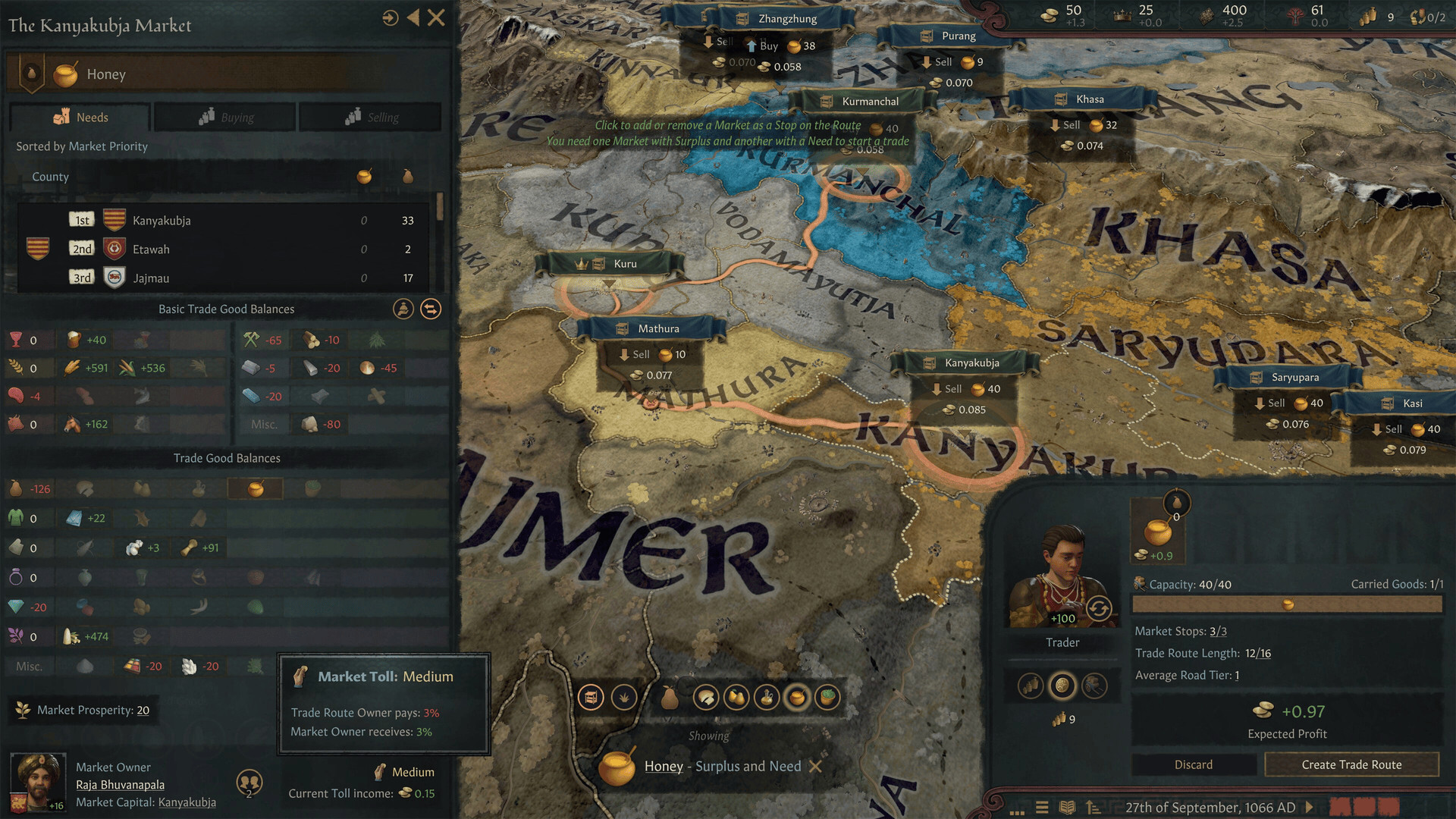
Republics and merchants are designed to interlock. A merchant family runs a company from a domicile in a city, and that county’s holder is their Patron, with the merchant as Beneficiary. Merchants run trade routes for 44 trade goods across 922 markets, lend gold at interest, and gain a Strong Hook over a ruler they lend to. A merchant in your city makes your markets richer, and your republic gives them a safe home base. Our merchant guide walks through a first merchant campaign, and our merchants playstyle guide goes deeper on the systems. One hotfix note: republics can now rescind their own monopolies in markets they do not control, where leftover monopolies were blocking trade.
Launch-day notes
Early Steam reviews were moving fast on launch day: Mixed with 272 reviews on 19 November, though an earlier snapshot the same day showed Mostly Positive. Treat any review score as a snapshot with a date. The mercenary cap is the big balance change: republics start with a slightly higher mercenary limit than other governments, but there is a hard cap on mercenary use, added to stop money winning wars outright. Gold still buys you an army, but it no longer buys you every war.
Source: Paradox Interactive / official game screenshots
What we still do not know
We would rather list the gaps than fill them with guesses.
- Term length in years, and whether it varies by Assembly law.
- Who votes in a Doge election, and how votes are weighted.
- What Patrician Rating’s scale is, what raises or lowers it, and what each level gates.
- Exactly what happens mechanically when you lose an election.
- The third administration’s in-game name, alongside Maritime and Communal.
- The in-game starting rulers of Venice and Genoa in each bookmark.
- How league cohesion is gained and lost, and the exact requirements to found the Hanseatic League.
We will update this guide as those answers are confirmed in play. If you can confirm one of them, tell us in the comments with a screenshot.
Start in Venice in 1066, grow the capital, take your two trade posts, keep opinion high, and arrive at your first election with gold in the treasury. The chair is rented. Make sure the next tenant is you.